

The wood decides the form
Matti Söderkultalahti turns wood into art with great dedication and a level of skill few possess.


In Ostrobothnia in the 1990s, teenagers spent their free time tinkering with cars. Matti Söderkultalahti was already practising woodturning. His interest in the material had begun before he started school.
“It is endlessly fascinating,” he says, when asked why wood in particular.
At 16, Söderkultalahti enrolled in vocational school, qualifying as a joiner and later as an artisan woodturner. He completed a specialist vocational qualification in carpentry (master carpenter) in 2006.
After some time working as a cabinet maker, Söderkultalahti grew tired of it.
“It may have been a kind of race with the material. It wore me down. In furniture making the wood has to be flawless and perfect.”
In his hands the wood began to take on different forms. It became one-of-a-kind wooden vessels and art objects, made using a technique that very few people in Finland still master.
“I never set out to make art when I started turning wood.”
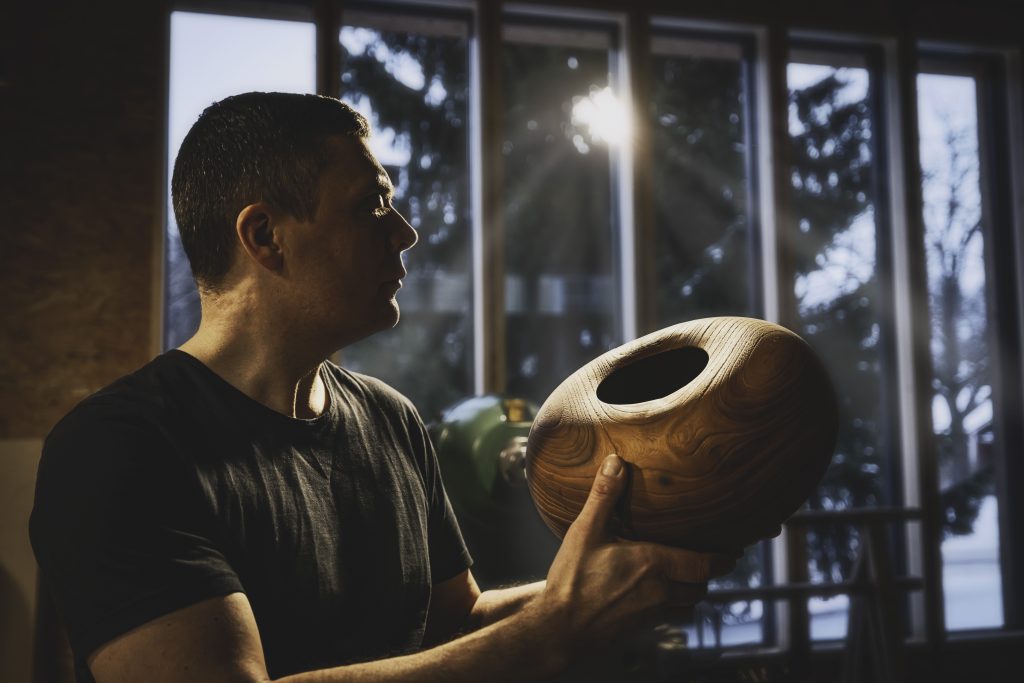
Today, Söderkultalahti’s works have been featured in exhibitions around the world, acquired for collectors’ collections, and he has been invited to join the internationally respected Michelangelo Foundation.
“I still do not consider myself an artist. I am a carpenter whose work pushes the material and the technique to their limits.”
After his basic studies, he developed his technique largely on his own. Formal training in the field is now scarce in Finland.
When he begins woodturning, Söderkultalahti does not yet know exactly what the final piece will be like. He does not make sketches. According to him, working with wood is an interactive process.
“The wood ultimately determines the form and size. I am, in a way, just a passenger. I may have an idea, but in the end the material itself decides what it becomes.”
Advertisement
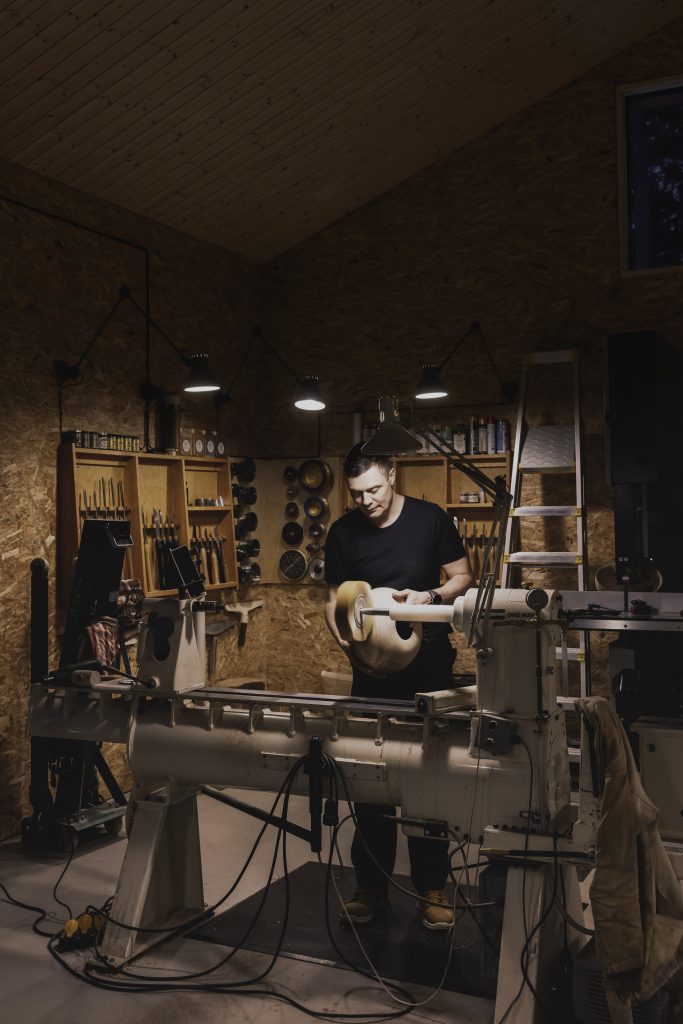
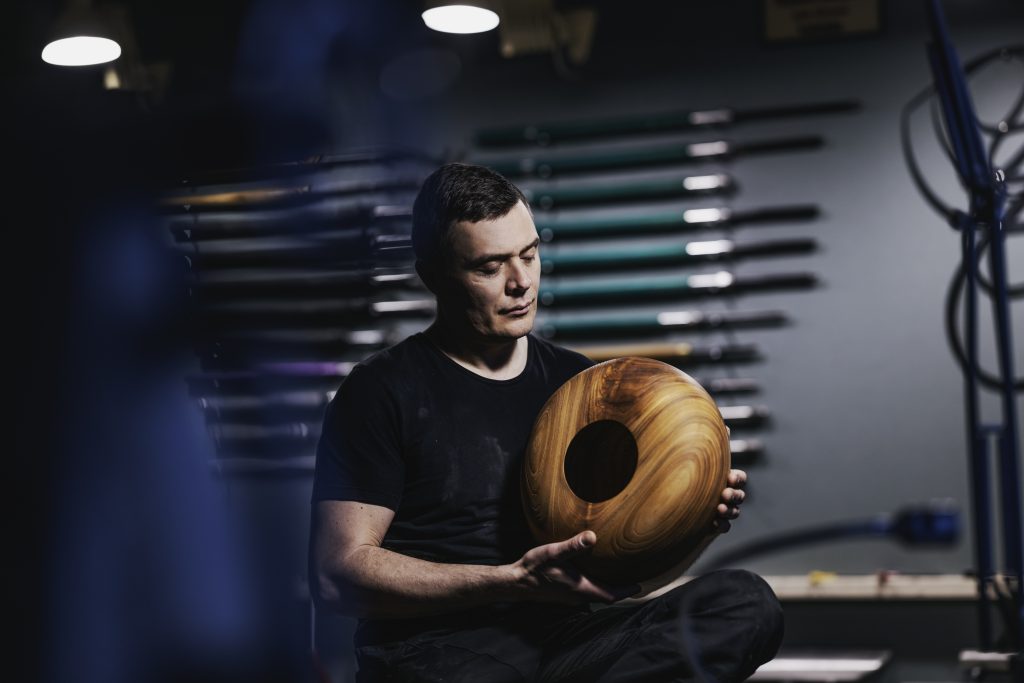
The process begins with a chainsaw and ends with precise woodturning down to the millimetre, followed by sanding and at times glass bead blasting and waxing.
“At their thinnest the rims of the vessels are only a few millimetres thick.”
According to Söderkultalahti, woodturning is a process of removal.
“There are those who build and those who remove. A ceramicist, a glassblower or a cabinet maker builds their work. I remove material. I remove wood, and once it is gone, it cannot be put back. At its simplest the wood spins and I simply remove what is unnecessary.”
Söderkultalahti works with hardwoods from the local area. Oak is one of his favourites. He draws much of his inspiration from nature and studies trees as he moves through the landscape. He has already examined the oaks along the Mathildedal avenue in his mind. Söderkultalahti uses only wood that others have discarded.
According to Söderkultalahti, woodturning is a process of removal.
“The more knots in the wood, the better. Those are the most interesting. I never know how they will behave. Every piece becomes entirely unique. With a straight log, you know exactly how it will behave and how the wood will live.”
When he comes across a particularly good log, he cuts it into pieces and studies what it might become.
“I get excited when I see that a log can produce really good pieces.”
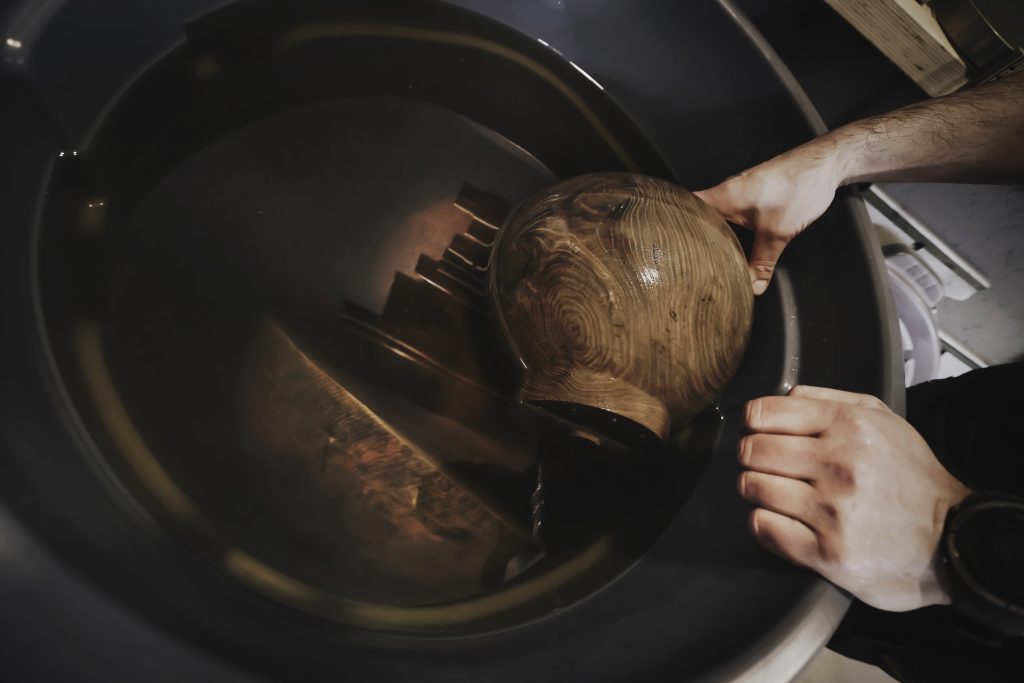
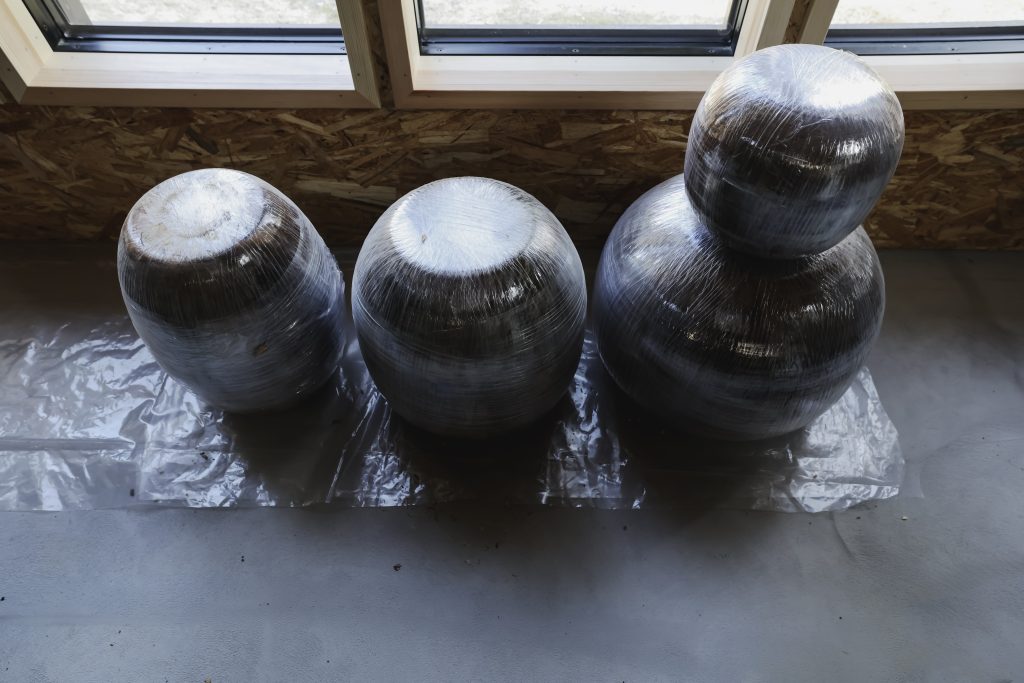
The works can only be made from fresh wood. Söderkultalahti turns the wood into blanks and stores them either tightly wrapped in plastic or submerged in water. This way the blanks can be kept fresh for years.
“I recently turned a vessel from a blank that had been stored in water for four years,” he says.
Woodturning is a slow process. Making a larger work can take dozens of hours. At times, the lights in Söderkultalahti’s workshop can be seen on even in the early hours of the morning.
“You can only stop the work at a certain stage. Sometimes you simply have to keep going until that point, no matter what time it is,” he says.
Oak, in turn, is difficult to work with. It cracks easily as it dries, and it contains tannins that darken tools and stain the hands.
Söderkultalahti says the work requires a certain stubbornness. Even so, he cannot imagine doing anything else.
His way of working reflects his high standards. “Good enough” is not an acceptable result for him. If he is not satisfied with the outcome, the work is cut in half.
“I always strive for perfection in the quality and form of my work.”
The pursuit of perfection extends to his workshop as well. The spacious, striking workshop in the yard of his home is entirely built by his own hands, down to each hickory nail he has made himself.
“I always strive for perfection in the quality and form of my work.”
Söderkultalahti admits that he has taken his work to extremes, and not everyone has always understood him. For some, however, his work holds great meaning.
He says the most meaningful feedback came from a woman who had purchased several of his works. She told him that the pieces have a healing effect in her life.
“She said that whenever she has a bad day, she takes one of the works into her lap. She touches the surface of the wood, feeling its texture. They have a calming and healing effect on her, she said. I feel that in those moments my work has fulfilled exactly the purpose I hoped for.”
Advertisement